
The First Six Years of Grand Lodge (‘The Moderns’)
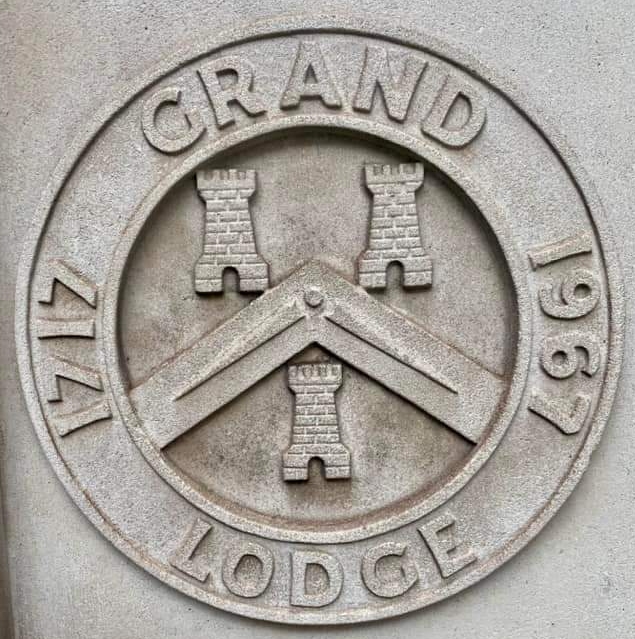
A meeting held at the Apple Tree Tavern in 1716, was described as follows:
“A.D.1716. the few Lodges at London finding themselves neglected by Sir Christopher Wren*, thought fit to cement under a Grand Master as the Center of Union and Harmony, viz. the Lodges that met;
1. At the Goose and Gridiron Ale-House in St Paul’s Church-Yard.
2. At the Crown Ale-House in Parker’s Street near Drury Lane.
3. At the Apple-Tree Tavern in Charles Street, Covent Garden.
4. At the Rummer And Grapes Tavern in Channel-Row, Westminster.
They and some old Brothers met at the said Apple-Tree, and having put into the Chair the oldest Master Mason (now the Master of a Lodge) they constituted themselves a Grand Lodge Pro Tempore in Due Form, and forthwith revived the Quarterly Communication of the Officers of the Lodge (call’d the Grand Lodge) resolv’d to hold the Annual Assembly and Feast, and then to chuse a Grand Master from among themselves, till they should have the honour of a Noble Brother at their Head.”
* Since at least the 18th century, the Lodge of Antiquity No. 2, one of the four founding Masonic Lodges of the Premier Grand Lodge of England in 1717, has claimed Christopher Wren to have been its Master at the Goose and Gridiron at St. Paul’s churchyard.
(Analysis indicates that the above statement was probably created retrospectively and certainly after 1722 as the term “Grand Lodge” is otherwise not recorded before that date. Also note the judicious use of the word ‘revived’ to indicate longevity when there has been no previous mention of “Quarterly Communications” and that it wasn’t until 1721 that a “Noble Brother” [i.e. a member of the Nobility] was indeed at their Head.)
“Whence Come You?”
‘Feast Societies’ had been popular since at least 1684 in and around London with annual meetings often being held on Saints days. The first decade of the 1700’s saw, the gradual diminution of these societies in London and by 1714, with the disappearance of the St. Cecilia society and similar, smaller organisations which organised annual feasts, as they began to relocate from the capital to more ‘Provincial’ settings.
The background being the holding of annual meetings for feasting, we can understand why the members of the four Lodges might have come together and in doing so, discussed the organisation of their own annual feast.
Subsequent to this, we know that in 1718 Anthony Sayer was made Grand Master and Sayer, a dedicated antiquarian, had gathered together a huge amount of Masonic material. Much of this material would have been gleaned from various guilds as the Feasting societies were little more than an annual gathering, convened specifically with the intent of dining.
Grand Lodge Meals were held at the Goose & Gridiron which could have seated up to fifty, which gives a useful indication of the size of Grand Lodge at that time.
There were, by 1721 around seven Lodges under the auspice of London’s ‘Grand Lodge’. One of these was (and is) the ‘British Lodge’, No. 8 which in 2022 celebrated its three hundredth year of meeting.
It is likely that there were this few simply because until 1723 a large number of ‘unaffiliated’ Lodges were unaware of any mechanism for joining Grand Lodge by the end of which year, the number of affiliated Lodges had grown to around fifty.
The Freemasons mentioned in Grand Lodge Minute Books of 1723-39, include very many notable and colourful characters. There were:
28 of noble birth;
18 painters, sculptors, engravers, etc.;
17 authors, poets, dramatists, etc.;
15 clergy and ministers;
15 scientists, antiquarians, etc.;
14 physicians and surgeons;
12 actors, musicians, singers, etc.;
6 architects;
5 printers and publishers;
4 lawyers;
3 men of fashion, dilettantes, etc.; and
2 public servants of ‘high standing’.
Of a score or so of others, one was possibly a privateer and another; a pugilist named James Figg who ran an academy of boxing and sword-fighting.
There were thus an overall total of around 160 ‘eminent’ members amongst probably a few hundreds of members of less note, which indicates that Grand Lodge was ‘likely’ supported by around 500 members at that time?
By 1725, there were around fifty warranted Lodges in London alone.
In 1733, it seems that in some instances, meetings needed ‘bolstering’ possibly due to the fact that diversities between workings meant shorter ceremonies in some Lodges. Lectures were occasionally included, one in particular entitled; “in the affirmation unless the medulla oblongata where the nerves of the whole system centre, be torn to pieces by a (musket) ball.” It seems that the Festive Board was also somewhat more exciting with entertainment, including “Sawing a Woman in Half” and a “Dancing Skeleton”.
Freemasonry was by now gaining traction and this is further evinced by much published discussion in the press, both good and bad, so little, it seems, has changed there.
Possibly inspired by Sayer’s vast collection of Masonic Materials, in 1721 Grand Lodge commissioned the writing of a set of Constitutions. These were drafted by Anderson and edited by ‘fourteen learned Brothers’. One Brother likely to be involved with the creation was George Payne (Grand Master in 1718) whose knowledge of the documented history was second to none. A third candidate is John Desaguliers (Grand Master inn 1719) as Anderson had indicated that it was during Desaguliers’ Mastership that Freemasonry had ‘begun in earnest’.
In 1738 Anderson published his second version of the ‘Constitutions’ wherein a record of the formation of Grand Lodge is to be found. However, if you consider that the record was created two decades after the formation, it is but fair to assume that few of the attendants at the formation were available to advise on the documented proceedings.
That said, if Anderson did have access to an attendant of the inaugural meetings, then Jacob Lamball is perhaps the best advocate for this role. Lamball was elected as the first Grand Warden and it therefore seems likely that he would have been present at least at the inaugural meeting on St. John the Baptist’s Day, 1717, if not at the formative meeting of 1716. However, it is not known how much influence, if any, he may have had on the 1738 Constitutions. Lamball is, therefore, the only person who has a probable connection with both the initial meetings and an active involvement in Grand Lodge freemasonry in the late 1730s and is therefore possibly the only person to whom Anderson could have turned to fill any gaps in his history of the formation of the Grand Lodge.
Considering that he was documenting the inaugural meeting, Anderson’s account is somewhat ‘sketchy’ as he doesn’t name any attendees or even the Master who presided stating that it was presided over by “the oldest Master Mason”, so it’s quite possible that he had no one to call upon for this information.
When examined, possibly in an attempt to prove establishment and longevity, Anderson’s text seems overly anxious to imply that the Quarterly Communications began in 1716 despite a lack of any evidence that they actually took place at all.
Anderson infers that Freemasonry grew rapidly over the subsequent years, but an account by William Stukeley stated that when he was made a Freemason in January 1721, he was “the first person made a freemason in London for many years.” and “We had great difficulty to find members enough to perform the ceremony” which contradicts Anderson’s account of significant growth. It IS quite possible that this was simple misconception given the secrecy that membership demanded, or that the reason that there were insufficient officers able to perform the ceremony is that few of them had been able to make themselves conversant with the ‘Three Degree’ system following the decision that the London Grand Lodge formally adopt the Third degree practiced elsewhere for a number of years.
There can be little doubt that Anderson’s view of the inaugural meeting is of one which is determined to portray London freemasonry as a significant factor not just the London social scene but throughout Freemasonry universal. This being somewhat at odds with the distinct lack of any other evidence concerning this meeting, that the details of such an important meeting were not properly recorded by those present; that no other record of the decisions made by the meeting would be kept; or that those present would subsequently forget significant details such as the name of the Master Mason (Master) in the Chair.
Therefore, the only reasonable conclusion is, that the meeting in 1716 at the Apple Tree Tavern was not considered at the time to be of any great significance. The subsequent importance placed on it in 1738 and ever since, is a later projection based on the success that the London Grand Lodge enjoyed by the 1730’s and an attempt to out-rank their competition and to verify their claim to be the oldest and most prestigious Grand Lodge of England.
The concept of secular clubs holding feasts annually on a particular Saints Day had begun to appear in London at the end of the seventeenth century, but, these had begun to decline by 1715. It does not, therefore, seem implausible that a number of those freemasons present at the Apple Tree Tavern should at some point during the previous two decades have been members of a society which indulged in such an annual feast, only to find those societies falling by the wayside as other societies became more popular. Under such circumstances, it is quite possible that the idea of holding an annual feast for freemasons would be suggested at such a meeting. It therefore appears very likely that the meeting at the Apple Tree Tavern did not, as Anderson suggests with the benefit of hindsight, seek to unify the failing society of freemasonry, nor did it seek to extend their influence until they could entice a “noble Brother” to the head of the order. Instead, it is perfectly reasonable to suspect that the meeting was little more than a social gathering of a number of freemasons from four lodges, along with those unaffiliated to any particular lodge, which simply decided, through the course of normal conversation, to hold an annual social feast at which freemasons would gather together. The idea that a Master and two Wardens would be elected to oversee the feast being perfectly in keeping with the concepts of masonic gatherings and it would naturally follow that those officers would be responsible for the business of organising the following year’s feast and act as the officers of the society for the forthcoming year.
In 1721, Montague, as Grand Master enjoyed a year in the position, but did not organise an annual feast. This annoyed Wharton who organised his own feast in the ‘Stationer’s Hall’ as the previous location would not be able to accommodate the number of attendees and thence proclaimed himself Grand Master. This action demonstrates that Grand Lodge although enjoying rapid growth, was very much in its infancy and prone to opinion, personalities and personal intervention, which no doubt led to the call for formal Constitutions to avoid a recurrence of these unfortunate incidents. This occurrence may have turned out to be most fortunate in the growth of the (then0 London Grand Lodge.
In 1723, the Grand Master, Earl of Dalkeith appointed Desaguiliers his Deputy. However, Wharton objected and called for a vote which found in favour 43 to 42. Wharton became unpopular with his fellow Brethren because of his un-Masonic behaviour and this indicates perhaps that Wharton was NOT the driving force to have the Constitutions formalised.
In 1723 having now established a formal ritual for ‘Consecrating’ a New Lodge and having begun to issue Warrants of Constitution, London Grand Lodge began to promote itself as “Grand Lodge” and in a demonstration of power announced that within the “Bills of Mortality” (boundary of London); “No Brother [may] belong to more than one lodge at one time within the Bills of Mortality” and “It is not in the power of any person or Body of Men to make any alteration or Innovation in the Body of Masonry without the consent first obtained of the annual Grand Lodge” but by 1738, they had removed the physical limitations hoping to extend their reach further across England making reference to their head as “The Grand Master of England”.
Indications from commentators of the time are that the Masonic populace of London (affiliated and ‘unaffiliated to London), did not necessarily recognise the London Grand Lodge as being part of a governing institution, but rather as organisers of occasional meetings (the new Quarterly Communications) and feasts so there was inevitable resistance to this edict.
